Why Arcades Are So Social (And Why Modern Gaming Isn’t)
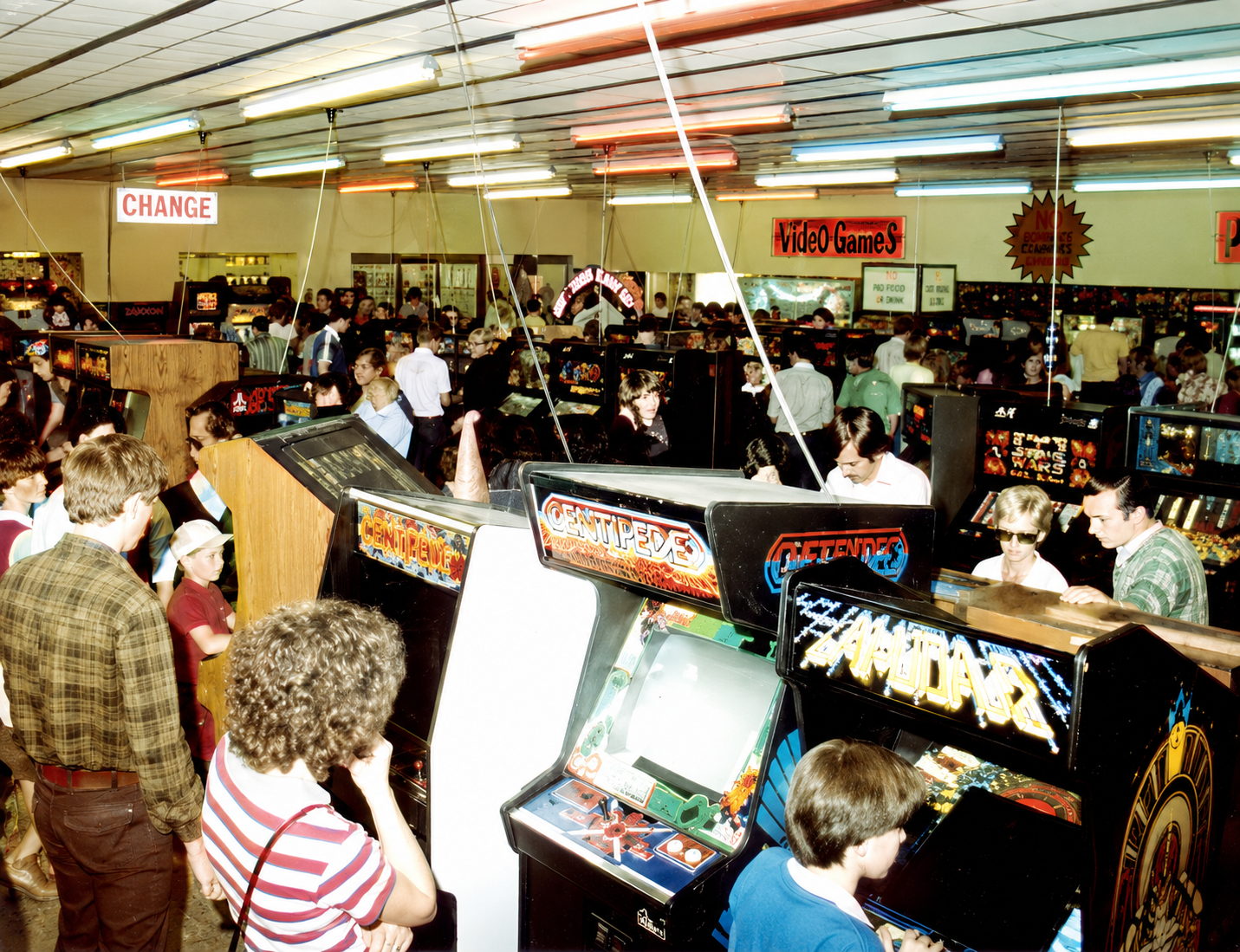
The Science of Why Arcades Were Social
Before online matchmaking, party chat, and Discord servers, arcades solved social interaction in a much simpler way: they physically forced people together.
A great arcade was never just about the games. It was about proximity, visibility, competition, sound, lighting, and human psychology all working together at once.
At Deep 6 Arcade, we think a lot about why classic arcades felt so alive — and why many modern “arcades” feel strangely empty even when they’re full of people.
The answer is surprisingly scientific.
Arcades Were Designed Around Visibility
Classic arcade games were intentionally built to attract spectators.
Developers knew that one person playing could quickly become five people watching.
Games like:
NBA Jam
Track & Field
Daytona USA
Tapper
all shared something important in common:
they were instantly readable from across the room.
You didn’t need instructions.
You could understand the excitement immediately.
Someone screaming during a last-second shot in NBA Jam.
A crowd slamming buttons during Track & Field.
Four linked Daytona cabinets all drifting through the same corner.
Arcades created spectators naturally.
Modern gaming often isolates players behind headphones, private matchmaking systems, and personal screens. Arcades did the opposite: they turned gameplay into public theater.
The Physical Layout Forced Human Interaction
The classic arcade floor wasn’t random.
Machines were intentionally close together:
shoulder-to-shoulder cabinet spacing,
narrow walkways,
shared control panels,
side-by-side multiplayer games,
visible high score boards.
People constantly occupied the same physical space.
You overheard reactions.
You watched strangers play.
You learned techniques by standing nearby.
You challenged people without needing an invite system.
The environment removed friction from social interaction.
Even waiting your turn created conversation.
High Scores Were Early Social Media
Long before usernames and online profiles, arcades had initials on scoreboards.
That mattered.
A machine sitting in attract mode with:
AAA – 1,284,500
was basically a public challenge.
The high score board created:
local reputation,
recurring rivalries,
status,
identity,
community memory.
Players returned repeatedly to defend scores or reclaim them.
The machine itself became a social hub.
At home, your achievement disappeared into your living room.
In an arcade, everyone saw it.
Sound Was a Psychological Weapon
Classic arcades were noisy by design.
That wasn’t an accident.
Developers carefully crafted:
attract mode music,
synthesized voice clips,
explosions,
crowd reactions,
start sounds,
victory jingles.
The sounds spilled into neighboring machines and pulled people toward excitement.
One cabinet cheering could redirect attention across an entire room.
Pinball machines especially mastered this:
bells, chimes, knocker sounds, flash lamps, and mechanical feedback created moments people physically turned to look at.
Modern entertainment spaces often try to reduce noise.
Classic arcades weaponized it.
CRT Monitors Changed the Feeling of Presence
Part of arcade socialization came from how CRT displays handled motion and light.
CRT screens:
refreshed differently,
emitted light directly,
had near-instant motion response,
produced natural motion clarity,
created bright scanline contrast.
That made gameplay easier to follow from a distance.
Spectators could visually track action more naturally than on many LCD replacements.
This is one reason authentic arcade environments feel “alive” in person in ways difficult to explain until you experience them side-by-side.
Arcades Rewarded Short, Repeatable Competition
Arcade games were built around short gameplay loops.
A match might last:
90 seconds,
3 minutes,
maybe 10 minutes for highly skilled players.
That constant turnover mattered socially.
Players rotated quickly:
“winner stays on,”
“next game,”
“my turn after this,”
“let me try.”
This created a constant cycle of interaction.
Modern online games often lock players into isolated sessions lasting 30–60 minutes or more.
Arcades kept social momentum moving continuously.
Why Authentic Arcades Still Matter
A real arcade is one of the few entertainment environments where strangers naturally interact without needing introductions.
People:
cheer for each other,
compete,
spectate,
laugh,
teach,
challenge,
and talk without screens separating them.
That environment wasn’t accidental.
It was engineered through cabinet design, sound, lighting, game pacing, and physical space.
The best arcades understood human behavior long before social media platforms ever existed.
At Deep 6 Arcade, preserving original machines isn’t just about nostalgia.
It’s about preserving the social experience those machines were originally designed to create.