What Makes a Great Retro Arcade? Authentic CRT Monitors Matter
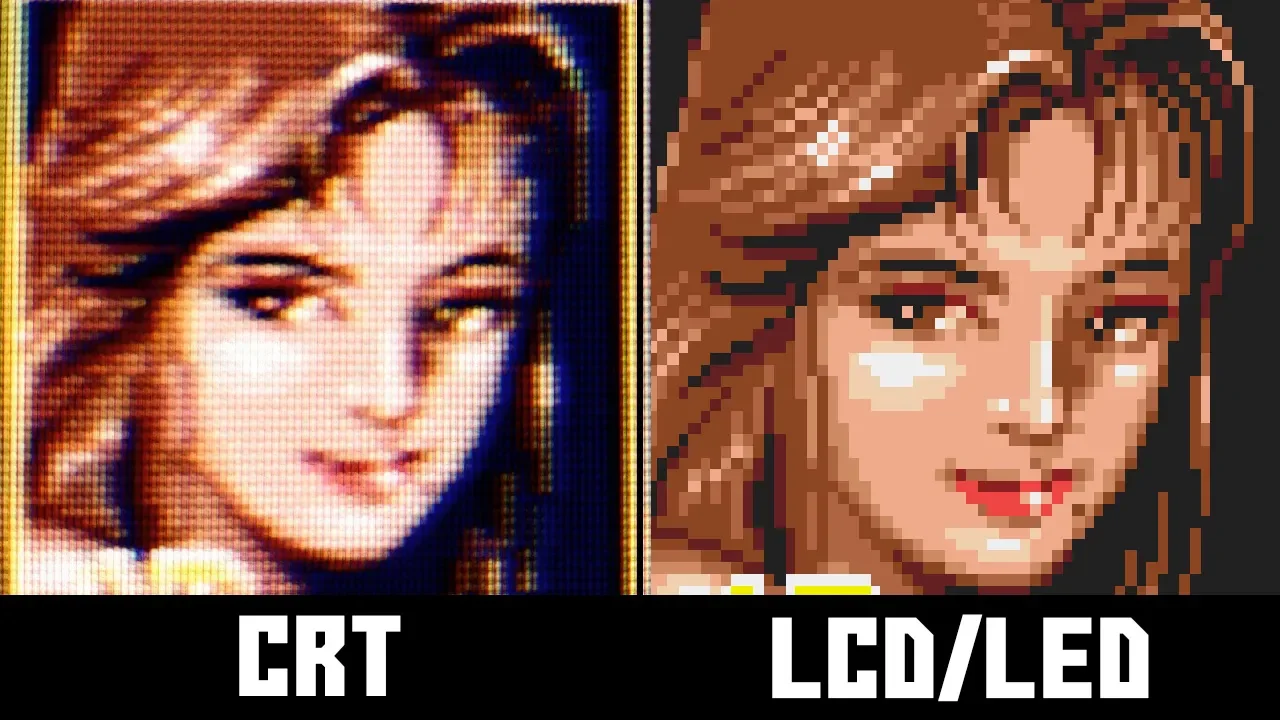
Image Source: Twitter – CRTpixels
Why Some Retro Arcades Feel “Off” — And Why Authentic CRT Arcade Monitors Matter
There’s a reason some retro arcades instantly transport you back to the golden age of gaming… and others feel more like a themed entertainment center with old cabinets.
At Deep 6 Arcade in Stratford, one of the biggest things we focus on is authenticity. That means preserving arcade games as close as possible to the way they were originally engineered, designed, and experienced in the 1970s, 80s, and 90s.
One of the biggest differences between a high-end retro arcade and a lower-tier one? The monitor!
The CRT vs LCD Difference
Many modern arcades replace original CRT monitors with LCD screens because CRT repair requires specialized knowledge, parts, calibration, and maintenance. LCD conversions are cheaper, easier, and more convenient.
But convenience comes at a cost.
Classic arcade games were never designed for LCD technology. They were built specifically around CRT displays — and the difference is enormous once you know what to look for.
What Is a CRT?
CRT stands for Cathode Ray Tube.
These are the heavy glass monitors found in original arcade cabinets, tube televisions, and broadcast displays from the arcade era. Unlike LCD screens, CRTs generate an image by firing electron beams across phosphors on the screen line-by-line at extremely high speeds.
This process creates several characteristics that retro games were intentionally designed around.
Scanlines: The “Secret Sauce” of Arcade Graphics
One of the most noticeable differences between CRT and LCD is scanlines.
CRT displays naturally draw horizontal lines across the image as the electron beam refreshes the screen. Arcade artists and game developers actually used these scanlines as part of the visual design.
Sprites, shading, gradients, and even anti-aliasing tricks depended on CRT blending behavior.
On an original CRT:
Pixels blend smoothly
Motion appears softer and more natural
Colors bleed together correctly
Black levels look deeper
Sprite edges appear less jagged
On an LCD:
Every pixel is rigid and sharply separated
Artwork can look blocky or harsh
Fine details become unnaturally exposed
Motion blur behaves differently
Games lose their intended visual texture
Many people don’t realize that classic pixel art often looks “wrong” on LCD because it was never meant to be viewed with razor-sharp digital precision.
Refresh Rates and Hertz Differences
Another major factor is refresh behavior.
Original arcade CRT monitors commonly operated at refresh rates around:
15kHz horizontal frequency
~60Hz vertical refresh (varied by game)
Some vector and medium-resolution games used completely different timings
Arcade hardware was engineered specifically around these timings.
CRT monitors display motion almost instantly because phosphors illuminate and fade rapidly. This creates extremely low perceived latency and exceptionally fluid movement.
LCDs work differently:
They sample and hold frames
Pixels stay lit longer
Motion clarity decreases
Input lag is introduced
Frame conversion may occur
Scaling artifacts can appear
Even modern “gaming” LCDs struggle to replicate the responsiveness and motion characteristics of a genuine arcade CRT.
Fast-motion games like:
Robotron: 2084
Defender
Tempest
Track & Field
NBA Jam
feel noticeably different on LCD conversions.
Resolution and Native Signal Problems
Classic arcade boards output low-resolution analog video signals.
CRTs naturally display these signals exactly as intended.
LCDs, however, are fixed-pixel digital displays. That means they must:
Convert analog to digital
Scale the image
Reprocess the signal
Fit it into a modern resolution
This often creates:
Input delay
Uneven scaling
Blurry pixels
Shimmering edges
Incorrect aspect ratios
Washed-out colors
Many LCD conversions stretch 4:3 arcade games into widescreen formats, completely changing the visual composition.
Authenticity Matters
At Deep 6 Arcade, we believe preserving original CRT displays is part of preserving arcade history itself.
That means:
Repairing original arcade monitor chassis
Rebuilding boards and components
Properly calibrating geometry and convergence
Maintaining authentic scanline presentation
Preserving original refresh behavior
Keeping games true to their intended experience
It’s harder.
It’s more expensive.
It takes significantly more technical skill.
But when you walk up to a real arcade cabinet and see that authentic glow, true scanline motion, and original phosphor response — you immediately understand why it matters.
The Experience You Can’t Fake
Retro arcades are not just about playing old games.
They’re about preserving a feeling.
The glow of a CRT in a dark arcade.
The warmth of analog colors.
The fluidity of original hardware.
The way vector graphics bloom.
The slight curvature of the glass.
The sound, timing, and response all working together exactly as designed decades ago.
That experience is becoming increasingly rare.
At Deep 6 Arcade in Stratford Connecticut, preserving that authenticity is one of the things that separates a true retro arcade from an imitation.
Because these games deserve to be experienced the way they were originally meant to be played.